

Center for Cultural and Environmental History
Manifesto
Center for Cultural and Environmental History, Latvian Academy of Culture
Despite all our troubles, history is alive and moving forward. While cultural history is its most venerable field, environmental history is one of its newest and most progressive. Together, they help humanity by describing alternative relationships between people, their experiences and environment.
In our corner of Europe, until very recently, history has been an antiquarian discipline, mostly interested in rulers, wars and politics. We aim to break with this tradition. Culture and nature, in their unique interaction, are two essential keys to understanding the present and the future — who we are and what will happen to us.
Land is more eloquent than maps. Forests are more than forestry. Air, water and fire give or take more than archives ever record. The four elements are more comprehensive than Artificial Intelligence (AI).
Riga is our point of departure for an intellectual journey that brings cultural and environmental history together. The imperial and post-imperial, colonial and postcolonial pasts of the Baltic region pose some of the most challenging questions in European history. We will situate the national past within global history and place Latvian scholarship on the world’s intellectual map.
 | Gustavs Strenga, head of the CCEH, is a tenured professor of cultural history at the Latvian Academy of Culture. He is a cultural historian interested in medieval memory and commemoration, afterlife of medieval heroes, ethnicity in the Middle Ages, and environmental component of the late medieval and early modern crafts. His recent publications include the monograph Remembering the Dead: Collective Memory and Commemoration in Late Medieval Livonia (Brepols, 2023) and the co-edited anthology (with Cordelia Heß) Doing Memory: Medieval Saints and Heroes and Their Afterlives in the Baltic Sea Region (19th–20th Centuries) (DeGruyter, 2024). |
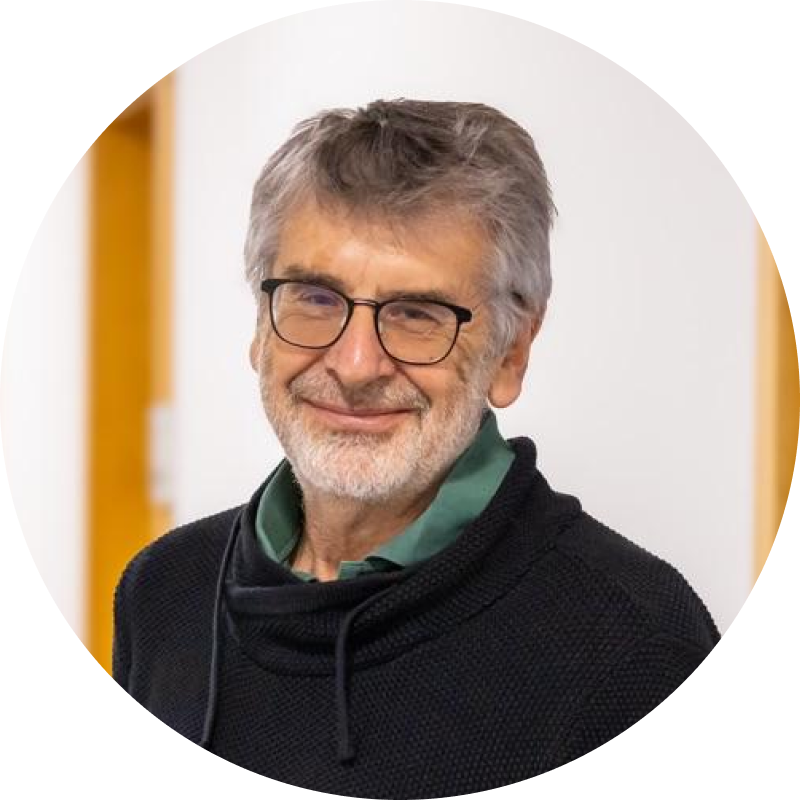 | Alexander Etkind, a partner of the CCEH, is an environmental historian with a background in cultural history. As a full professor, he taught at the University of Cambridge, where he also was a Fellow of King’s College; the European University Institute in Florence; and Central European University in Vienna. He was the Principal Investigator of several high-profile research grants, such as Memory at War: Cultural Dynamics in Russia, Poland and Ukraine (2010-13, at Cambridge, financed by HERA) and the Open Society Hub for the Politics of the Anthropocene (2023-27 in Vienna, financed by OSF). His books have been translated into many languages, including Latvian. The most relevant for the CCEH are Nature’s Evil: A Cultural History of Natural Resources (Polity, 2021) and Decarbonization and the Petrostate (University of Amsterdam Press, 2027). |
Aims of the Centre
The Centre for Cultural and Environmental History is an initiative operating within the research remit of the Institute of Arts and Cultural Studies at the Latvian Academy of Culture (LAC). Its aim is to promote research into the phenomena and processes of the past in Northern Europe, the Baltic Sea region and Latvia from the perspectives of cultural and environmental history. Cultural history, a discipline concerned with every aspect of human life that examines the meanings people create, the motives behind their actions and how these are represented, is as yet little known in Latvia. Likewise, environmental history in Latvia has taken only its first steps. Through conferences and seminars, the Centre seeks to foster networking, collaboration and the exchange of ideas among cultural and environmental historians. The Centre is intended to serve as a platform for new research projects and for discussion of topics relating to cultural and environmental history, both in Latvia and with a wider international audience.
Research themes within our focus
From the perspective of cultural history:
- we are interested in how people in the past saw and sensed the world;
- we are interested in how people in the past expressed themselves through festivals, ceremonies, rituals and various representations of thoughts and ideas.
From the perspective of environmental history:
- we are interested in how people have changed nature and the environment;
- from the perspective of environmental history, we are interested in how natural resources, and their availability or scarcity, impact societies.
From the perspectives of environmental and cultural history:
- we are interested in how the environment shapes people: their lives in all their facets, the structure of society and responses to external events.