

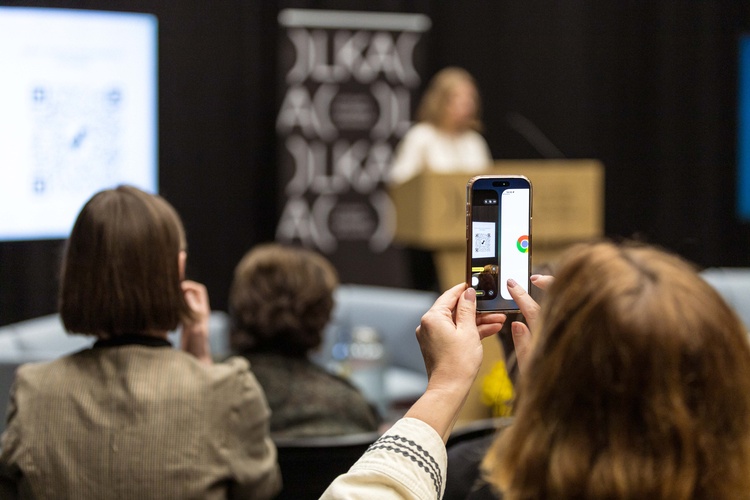
How Does Latvia Preserve and Safeguard Its Culture? What Does Culture Contribute to Latvia? Researchers Present Three Years of Research Results at the CERS State Research Programme Closing Conference
On 9–10 September 2026, Riga hosted the closing conference “Cultural Research for Our Future Choices” of the Ministry of Culture’s State Research Programme project “Cultural and creative ecosystem of Latvia as a resource of resilience and sustainability”/CERS. Over two days, researchers, cultural sector professionals, policymakers and students discussed the project’s key results and how research-based knowledge can contribute to cultural policymaking, the development of culture as a sector of the economy, and the quality of life in society.
“The researchers of the CERS State Research Programme project have succeeded in demonstrating and providing evidence that culture plays a crucial role in strengthening societal resilience and sustainability, as it enhances our capacity to adapt, recover from crises and imagine the future. Especially in these times, it is important to recognise and understand the potential of art and creativity in seeking innovative approaches to contemporary challenges. Culture is the story of who we are, of our families, our communities and the values of our nation. It is our shared resource that strengthens, encourages and inspires us,” emphasises Rūta Muktupāvela, Project Leader of CERS.
The results of CERS research – in the form of research reports, recommendations, guidelines, monographs and publications – are being made available to national and local policymakers, developers of policy and planning documents, managers of cultural organisations, and educational, heritage and memory institutions. The project has generated new knowledge and unique data that can be used to support evidence-based cultural policymaking.
The conference presented part of the work carried out over the three-year project, using discussions and conversations to explore the relevance and practical application of the newly generated knowledge. CERS researchers have addressed the quality, diversity and accessibility of cultural provision; employment and education in the cultural and creative sectors; the impact of digital technologies on creativity and cultural consumption; the complex legacy of Latvia’s Soviet-period culture and art; and the assessment of culture’s social and economic impact.
The results of CERS challenge the widely circulated stereotype of culture as merely a “consumer” of public funding by providing detailed calculations and data on culture’s measurable economic impact on the Latvian economy. Calculations carried out within CERS show that every euro entering a cultural sub-sector generates an average of EUR 2.4 in overall economic activity. The cultural sector also generates demand in other sectors of the economy, including transport, tourism and hospitality, while declining cultural consumption also affects consumption beyond the cultural sector.
At the same time, the research reveals significant risks to the sustainability of the cultural sector’s human resources. Remuneration, social security and economic stability remain among the most pressing challenges for the sector, while combining several sources of income in the cultural and creative sectors should be viewed as a structural necessity rather than an individual choice. In the previous year, 22% of surveyed cultural and creative sector professionals had considered changing their job or occupation while remaining within their professional field, while a further 25% had considered moving to another field. These findings indicate a considerable risk of losing qualified professionals from the sector.
The right of Latvia’s residents to culture was another key focus of the conference, particularly the question of how to ensure diverse and accessible cultural provision regardless of place of residence, income, age, ethnicity, education or other characteristics. The research findings highlight the need for cooperation between national and local government, participatory decision-making, collaboration among partners across the cultural ecosystem, and carefully considered investment of public funding in the creation of high-quality cultural content. Digital cultural content, meanwhile, should primarily be regarded as complementing rather than replacing in-person cultural experiences.
CERS researchers have also analysed the social impact of culture, including its relationship with quality of life and well-being, social connections and inclusion, and people’s ability to remain resilient in times of crisis. The cultural needs and assessments of society have been incorporated into cultural policy recommendations. The project’s reports and recommendations draw on an extensive body of data gathered from different groups and communities across Latvia through workshops, focus groups and interviews, as well as survey data representing the views and experiences of Latvia’s population.
Over the three years of the CERS State Research Programme project, 92 researchers, including 32 students, participated in its implementation, making the strengthening of Latvia’s research capacity in culture and the arts another significant project outcome. The project’s scientific outputs include 86 scientific publications, eight monographs, four collections of scientific articles, 11 cultural policy reports and sets of recommendations, and 18 datasets. Researchers presented 122 papers at conferences, prepared nine applications for new research projects, and organised 11 conferences. The project also resulted in or contributed to 11 doctoral dissertations and 15 Master’s theses.
The research results have already entered the study process: they have been integrated into 19 study courses, while at least 190 students have participated in various research activities, including surveys, methodology testing, hackathons, pilot studies, internships, seminars, conferences, summer schools and symposia.
The first day of the conference focused on how to ensure the transfer and practical implementation of knowledge generated by researchers – in other words, how research findings can be transformed, in cooperation with policymakers and the cultural sector, into evidence-based cultural policy decisions and practical solutions. Discussions centred on the 11 policy reports developed within CERS and brought together the different stakeholders to exchange views on the researchers’ conclusions and recommendations.
The second day focused on the project’s academic results and the new knowledge generated about Latvian culture and art, reflected in monographs, publications, doctoral dissertations and other research outputs.
The conference concluded with a discussion involving early-career researchers and students who had worked and participated in CERS. They highlighted the valuable academic and practical experience gained through the project, while also expressing concerns about the attitudes of Latvian politicians towards the work of researchers.
The conclusion of the project also identifies questions that require further research. These include the contribution of culture and the arts to the development of a democratic, resilient and secure Latvia; the potential of culture to strengthen the country’s international competitiveness; the impact of digital transformation and artificial intelligence on artistic creation and cultural consumption; the entry of new talent into the sector; and the cultural sector as a safe and sustainable environment for employment.
The project “Cultural and creative ecosystem of Latvia as a resource of resilience and sustainability”/CERS is implemented by the Latvian Academy of Culture in cooperation with the Art Academy of Latvia, Jāzeps Vītols Latvian Academy of Music, the National Library of Latvia, and the Institute of Literature, Folklore and Art of the University of Latvia. The project “Cultural and creative ecosystem of Latvia as a resource of resilience and sustainability”/CERS (No. VPP-MM-LKRVA-2023/1-0001) is funded by the Ministry of Culture of the Republic of Latvia within the State Research Programme “Latvian Culture – a Resource for National Development” (2023–2026”. The State Research Programme is administered by the Latvian Council of Science.
Information prepared by:
Aija Lūse, Science Communication Specialist
aija.luse@lka.edu.lv | 29107218
Institute of Arts and Cultural Studies, Latvian Academy of Culture